Disclosure: Some links on this page are affiliate links. If you buy through them, we may earn a small commission at no extra cost to you. See our affiliate disclosure for details.
Last updated: 9 November 2026
Two hours into a wet walk, the leather across your toes has gone dark and heavy, and every step over the bog makes a faint squelch. The boots are not leaking yet. They are just drinking.
Here is how to waterproof hiking boots: clean them properly, leave them damp, then rub a wax into smooth leather or spray a water-based proofer onto fabric, suede and nubuck, wipe off the excess after a couple of minutes, and let them dry slowly at room temperature. That is the whole job. Most of the skill is in matching the product to the material.
Table of contents
Do your boots actually need proofing?
Drip some water on the upper. If it beads and rolls off, leave the boots alone. If it soaks in and darkens the material, the outer finish has worn off. Gore-Tex says on its footwear care page that this is the moment to reapply a durable water repellent (DWR).
A membrane does not let you skip this. Nikwax explains in its guide to cleaning and waterproofing boots that even boots with a liner such as Gore-Tex will eventually soak up water on the outside, and once the outside is wet, foot sweat cannot escape. That is the clammy feet feeling people blame on a leak.
One more thing before you buy anything. Nikwax notes that if your boots are fairly new or recently proofed, a good clean alone can revive the water repellency. Try that first.
Clean them first, properly
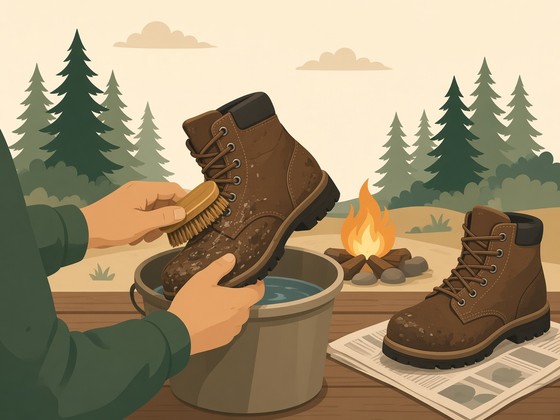
Proofer on muddy boots is wasted effort. Dirt itself works against the water repellency, and Nikwax warns that conventional detergents leave behind a thin film that attracts water. Use a footwear cleaner, or lukewarm water with a small amount of liquid detergent as Gore-Tex suggests for its boots (for leather, check the boot maker’s instructions first).
- Take out the laces and, if you can, the insoles. Shake out grit.
- Knock off the worst mud outside, then scrub with a stiff brush. A boot cleaning brush on Amazon is worth a look if an old washing up brush is all you have.
- Get into the seams, the tongue gusset and around the eyelets, where grit sits and rubs.
- Rinse well. Never put boots in the washing machine; Gore-Tex says not to.
Do not dry them yet. Most proofers go on wet.
Wax for leather, spray for fabric and suede
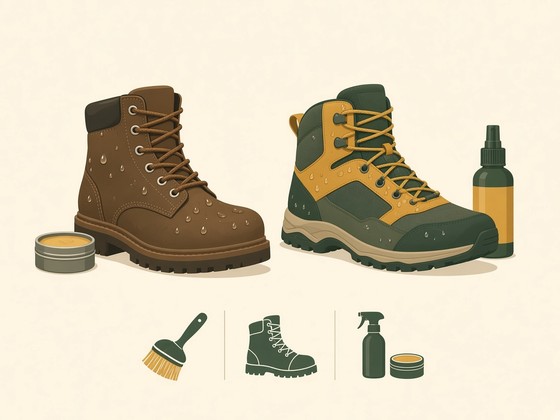
This is where people go wrong. One tin of wax does not suit every boot.
- Smooth, full-grain leather: a leather wax. Nikwax’s Waterproofing Wax for Leather page says it is for smooth leather only, not nubuck or suede, and that it may darken leather.
- Fabric, or fabric and leather mixed: a water-based spray such as Nikwax Fabric & Leather Proof.
- Nubuck and suede: a spray made for them, which Nikwax says keeps the brushed texture. Wax on nubuck turns it into a smooth, waxy finish.
Membrane boots need a little care here. Gore-Tex advises a water-based pump spray and says not to use waterproofing waxes or greases, because they can affect breathability. Some wax makers say their product is fine on membrane boots, so check what your boot maker recommends and follow that.
My opinion: most modern hiking boots are fabric and suede hybrids, and a spray is the safer default. Save the wax for proper leather boots.
How to waterproof hiking boots, step by step
With the boots clean and still damp, work one boot at a time.
- Spray: Nikwax says to apply to clean, wet footwear from about 15 cm, get it into the seams, then remove the excess with a cloth after 2 minutes. Grangers gives similar directions for Footwear Repel Plus: spray evenly onto freshly cleaned, damp boots, wipe off the excess, let them dry fully, and add a second coat once dry if needed.
- Wax: rub it in with fingers or a sponge, paying attention to seams, then after 2 minutes wipe off the excess with a damp cloth and buff. A leather boot waterproofing wax on Amazon suits full-grain boots; for mixed uppers, a fabric and leather waterproofing spray on Amazon is the closer match.
Test on a hidden patch first if your boots are a light colour. Both Nikwax products warn of darkening.
Treat the whole upper, not just the toe. Water finds the stitching, the flex creases and the spot where the tongue meets the boot.
Dry them slowly, away from the fire
Here is the bit that wrecks boots. A radiator, a campfire or a hairdryer feels efficient. Nikwax says drying too quickly can crack leather and make bonded soles peel, so keep boots away from fires and radiators and let them dry at room temperature.
Stuff the toes with newspaper and swap it when it is wet. Gore-Tex says convection-style boot dryers work well if you need them sooner. For best results Nikwax suggests giving footwear 24 hours to dry before you wear it.
If you are breaking in a new pair, proof them before the first long walk; our guide on how to break in hiking boots covers the rest. Wet boots also soften skin, so pair them with decent hiking socks and read our tips on preventing blisters when hiking. A spare pair of socks in one of our dry bags earns its place on a wet day.
Do it the evening after a muddy walk, not the night before the next one. Boots that dry overnight by a radiator rarely thank you.
Waterproofing hiking boots FAQ
How often should I waterproof hiking boots?
When water stops beading and starts soaking into the upper. Nikwax suggests reapplying as necessary and after use in severe conditions, so heavy wet seasons mean more frequent top ups.
Can I use leather wax on suede or nubuck boots?
Nikwax says its leather wax is for smooth leather only and will turn nubuck into a smooth, waxy finish. Use a spray made for nubuck and suede instead.
Do Gore-Tex boots still need waterproofing?
The membrane stays waterproof, but the outer material can soak up water and stop your feet breathing. Gore-Tex recommends a water-based pump spray and says to avoid waxes and greases.
Should boots be wet or dry when I apply proofer?
Nikwax and Grangers both say to apply their sprays to clean, damp or wet footwear. Nikwax says its leather wax works on dry or damp leather.