Disclosure: Some links on this page are affiliate links. If you buy through them, we may earn a small commission at no extra cost to you. See our affiliate disclosure for details.
Last updated: 8 November 2026
Ten minutes from the car park, the hip belt has crept up onto your ribs and one shoulder is already burning. You tug a strap, it helps for a hundred metres, then the ache comes back.
Here is how to fit a hiking backpack: measure your torso length from the C7 bump at the base of your neck down your spine to the iliac crest (the top of your hip bones), put the hip belt on that hip shelf first so it carries most of the weight, then tighten the shoulder straps, load lifters and sternum strap in that order. The pack is rarely broken. It just has not been fitted yet.
Table of contents
Measure your torso, not your height
Height tells you little. A pack frame only cares about the stretch of spine between your neck and your hips. That is your torso length, and it is what makers size by.
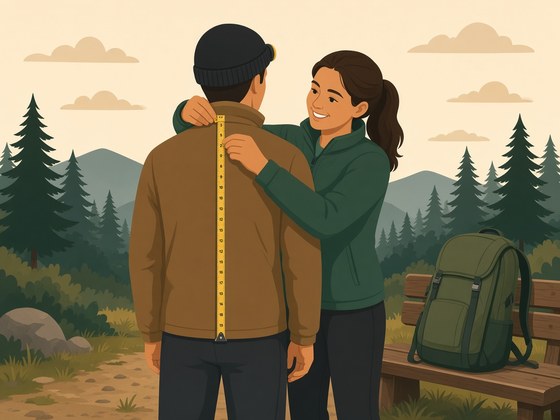
Osprey’s size and fit guide starts at the C7 vertebra, the bony bump at the base of the neck (tuck your chin and it pops out), and follows the spine down to the top of the hip bones. Gregory’s torso length guide uses the same points.
For the bottom point, rest your hands on your hips, thumbs pointing back, and feel for the top rim of the pelvis. That rim is the iliac crest. The measurement ends where a line between your thumbs crosses your spine.
- Use a flexible tape. A soft tape measure on Amazon is worth a look if the only one at home is a builder’s tape.
- Have a friend follow the curve of the spine, not a straight line.
While the tape is out, measure around your hips at the iliac crest, not your trouser waist. Osprey says the belt padding should wrap your hips and leave a gap of about 3 to 6 inches between the pad tips once tightened. Keep both numbers handy when you compare packs in our best hiking backpacks roundup.
Put the hip belt on the right bones
Loosen every strap and add some weight first. An empty pack lies about fit. Osprey suggests roughly 4 to 9 kg of gear for a try-on, and Gregory says about 4.5 to 9 kg.
Lift the pack on and shrug slightly so the hip belt lands on your hips. Makers word the spot differently. Osprey wants the padding centred over the hipbone, half above and half below. Gregory’s fit and sizing advice puts the top edge about 2.5 cm above the iliac crest. In practice both mean the bony shelf of your hips, not the soft waist above it.
Buckle it and pull it snug, like a pair of hands gripping your hip bones. A belt near your belly button slides down all day and hands the load back to your shoulders.
My opinion: the hip belt is the most important strap on the pack, and the one people most often tighten last, or not at all.
How to fit a hiking backpack: tighten straps in order
Each strap changes how the next one sits. Osprey’s how-to-fit guide runs hip belt first, then shoulder straps, then load lifters, then the sternum strap.
- Shoulder straps: pull down and back until they wrap your shoulders with no gap. Stop before they lift the hip belt.
- Load lifters: the small straps from the top of the shoulder straps to the pack body. Osprey says they should sit at about 30 to 60 degrees when the torso size is right, and calls about 45 degrees optimum.
- Sternum strap: clip it across your chest and tighten until the shoulder straps stop drifting outwards. Firm, not tight.
Two quick checks. Osprey puts the harness yoke about 2.5 to 5 cm below C7. Gregory says the shoulder straps should start wrapping onto your back about 8 cm below the top of your shoulders; if they start lower, try a larger size.
Walk-test and fine-tune
Walk around the house. Do the stairs. Lean forward as if stepping over a stile. The pack should move with you, not swing.
Relax the load lifters on the flat and pull them in on steep ground. If something hard digs into your spine, repack; our guide on how to pack a hiking backpack covers keeping heavy items close to your back.
Check again after the first half hour on the trail. If you walk with poles, set their length after the pack is sorted; our tip on how to use trekking poles explains how.
When straps cannot save the fit
Some problems are not about adjustment. Load lifters pointing flat back or downwards usually mean the torso size is too short for you. Lifters climbing steeply towards your ears suggest it is too long. If the back system adjusts, move it before giving up.
Once the size is right, padding can help. Backpack shoulder strap pads on Amazon are worth a look if straps still bite after a correct fit, and a hiking backpack hip belt pad on Amazon can soften pressure on bony hips. Neither can fix a torso size that is simply wrong.
My opinion: if a pack still hurts after a proper fit and a sensible load, return it while you can. And if your feet complain next, start with good hiking socks.
Fit it once at home, tape out and kit on the floor, then let the hip belt do the heavy lifting. You will know it worked when you stop thinking about the pack and start looking at the view.
Hiking backpack fit FAQ
Can I measure my torso length without help?
Yes, with a mirror. Mark C7 with a small piece of tape, find the iliac crest with your thumbs, then run a soft tape down your spine. A friend is more reliable.
What if I fall between two pack sizes?
Try both with weight inside. Check where the shoulder straps begin to wrap and the angle of the load lifters, then pick the size that gets both right.
Does a small daypack need the same fitting steps?
Same steps, lower stakes. Many have a thin webbing belt and no load lifters, so the shoulder and sternum straps do more of the work.
Why do my fingers tingle or go numb on long walks?
Osprey links it to a sternum strap that is too loose, and warns that one pulled too tight can restrict breathing. Shift weight onto the hip belt and reset the chest strap.