Disclosure: Some links on this page are affiliate links. If you buy through them, we may earn a small commission at no extra cost to you. See our affiliate disclosure for details.
The forecast said 4°C. Fine on paper. Then the wind found the tent door at 2 a.m., my socks were damp from the evening walk, and I spent an hour curled into a ball pretending the bag’s “limit” rating meant something useful. It did not. That night taught me what most outdoor retailers quietly repeat: the number on the hangtag is a starting point, not a promise.
If you want the short answer on the best sleeping bags for camping, match the bag to your coldest expected night, read the ISO comfort rating first (not the marketing headline), and build a sleep system around an insulated pad. Down packs smaller. Synthetic forgives damp air. Everything else is fit, weight, and how you actually camp.
Quick version: synthetic Trailmade-style bags for first car camps, Kelty Cosmic Down for dry trips where pack size matters, Marmot Trestles for dewy, drizzly weekends.
| Product line | Best for | Key spec band | Skip if |
|---|---|---|---|
| REI Co-op Trailmade-style synthetic | First proper camping bag, weekend car camps | Three-season synthetic; durable shells | You already count grams for multi-day trails |
| Kelty Cosmic Down | Step into down without alpine pricing | Compressible loft; mixed campsites | Wet pitches are your normal forecast |
| Marmot Trestles synthetic | Dew, drizzle, humid shoulder seasons | Synthetic that still lofted after damp pitches | Packed volume must stay tiny |
A bag is only half the bed. Pair it with one of the best sleeping pads for camping, pitch it under one of the best camping tents for car camping, and keep a warm breakfast in mind with the best camping stoves.
Table of contents
How sleeping bag temperature ratings actually work
Most reputable bags now follow ISO 23537 (you may still see older EN 13537 labels). Two numbers matter for normal camping:
- Comfort: roughly the temperature where a cold-leaning sleeper can rest in a relaxed posture without shivering. Cold sleepers should lean on this number.
- Lower limit: a warmer sleeper, curled up, just managing thermal balance. Surviving, not snuggling.
Outdoor shops often suggest a buffer of about 5 to 8°C below the overnight low you expect. So if the valley forecast bottoms out near 5°C, a bag with a comfort rating around 0°C to minus 3°C feels more honest than one that only looks warm on the lower-limit line.
Down vs synthetic fill
Down traps a lot of warmth for its weight and compresses into a small stuff sack. Brilliant when you hike far and the forecast stays dry. The catch is moisture. Once down clumps wet, loft collapses and warmth drops hard until it dries.
Synthetic fill keeps more of its insulating structure when damp, usually costs less, and shrugs off the odd spill or humid night. The trade-off is bulk and weight.
Opinion, labelled as such: for car camping and wet-climate weekends, I reach for synthetic more often than the gear forums admit is fashionable. For dry alpine stretches where every gram counts, down still wins on pack size.
Shape and fit notes that change how warm you feel
Mummy bags taper at the feet and hug the torso: less dead air to heat, better warmth for the weight, tighter feel. Rectangular bags give you room to roll and often zip together as doubles, but they leak heat faster. Tapered bags sit in the middle.
If you swim inside a bag, warm air slides around and you cool off. If it is skin-tight at the shoulders or hips, loft gets crushed and cold spots appear. A hood and a draught collar help on clear nights when heat rises straight out of the neck.
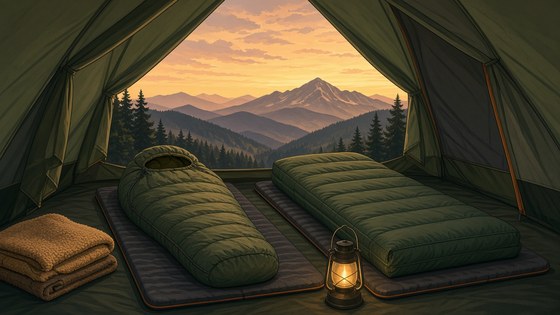
The best sleeping bags for camping: three types worth a look
These lines keep turning up in reputable outdoor roundups. Read the current comfort number before you buy.
Budget synthetic workhorse: REI Co-op Trailmade-style bags
If you want a first proper camping bag without spending backpacker money, synthetic three-season options in the Trailmade vein are the usual starting point: durable shells, straightforward cuts, and ratings aimed at spring-to-autumn nights.
Best for: weekend car camps. Skip if: you already count grams for multi-day trails. Browse REI Trailmade sleeping bags on Amazon and compare the comfort rating to your coldest planned night.
Affordable down: Kelty Cosmic Down
Kelty’s Cosmic Down line is the classic “step into down without selling a kidney” recommendation. Compressible loft and a roomier cut than ultralight racers. Keep it in a dry bag inside the pack if rain is forecast. Browse current listings: Kelty Cosmic Down sleeping bags on Amazon.
Wet-weather synthetic: Marmot Trestles
The Trestles family is the go-to name when you expect dew, drizzle, or a humid night. Expect more packed volume than down and ratings aimed at cool camping, not deep winter. I like this category for Scottish and Lake District weekends when the ground never fully dries. Start here: Marmot Trestles sleeping bags on Amazon.
Do not forget the pad (R-value tip)
Bag temperature ratings assume you are on an insulated sleeping pad. Match pad R-value to the season: roughly R-2 to R-3 for mild summer, around R-4 for cooler three-season nights, higher when frost is likely. A warm bag on a thin summer mat still feels like sleeping on a fridge shelf.
When you step out for a midnight pee, a decent headlamp for night camp matters more than another logo on the bag.
Packing and care tips that stretch bag life
- Store loose. Long-term compression kills loft. Hang it or keep it in a large mesh or cotton sack at home.
- Stuff, do not roll. Stuffing spreads stress across the fill instead of creasing the same lines.
- Dry before you pack away. Even “dry” nights leave condensation.
- Wash sparingly with a cleaner made for down or synthetic, following the maker’s instructions.
- Use a liner. It keeps skin oils off the shell and is easier to wash than the whole bag.
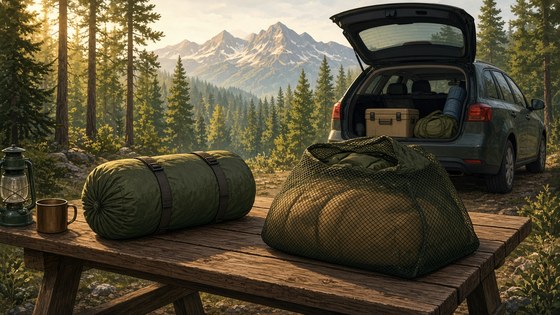
A dedicated pillow finishes the sleep system: see our guide to the best camp pillows. Then stay warm while camping so the 2 a.m. wind is just noise on the flysheet. That is the whole job.
Quick FAQ
Can I use a summer bag with more clothes?
A little. Base layers and a beanie nudge you through a cool evening, but they will not turn a 10°C comfort bag into a frost-night tool.
Why did I still feel cold in a 0°C bag?
Check which number was 0°C: comfort or lower limit. Then check the pad. Then check dampness. Most cold-bag stories are one of those three.



Leave a Reply