Disclosure: Some links on this page are affiliate links. If you buy through them, we may earn a small commission at no extra cost to you. See our affiliate disclosure for details.
The zip on my old tent had a stiff corner, and I was working it open at 11pm with my phone torch clamped between my teeth. Drool, a pin-sharp beam on the wrong bit of fabric, and a mate outside asking if I had found the gas yet. My headlamp was in the lid pocket of my pack. Charging, I had told myself. It had been flat since Easter.
The best headlamps for camping are not the brightest ones on the box. They have a beam that suits close work, a red mode so you do not blind the person opposite, a lock so they stay off in your pack, and power you can top up where you are going.
Quick version: for most campers, a light everyday lamp in the Petzl Tikka mould covers cooking, tent jobs and loo runs. If you also walk early or late, a Black Diamond Spot-style lamp with a proper spot beam and a lockout is the safer all-rounder. On a budget, or kitting out a family, a rechargeable multipack puts a lamp on every head.
Table of contents
How to choose the best headlamps for camping
Lumens vs beam pattern. Lumens tell you how much light comes out, not where it goes. A flood beam spreads a wide, even pool for cooking and rummaging in a tent. A spot beam throws a narrow line down the path for picking out roots on a descent. For camp chores, 100 to 200 lumens on flood is plenty.
Red light mode. This is camp manners. Red keeps your night vision and does not blast your neighbour every time you turn to talk. Check you can reach red without cycling through full white first.
USB-C rechargeable vs AAA. Rechargeable lamps are cheap to run and easy to top up from a power bank. AAA lamps win on long trips with no charging and in proper cold, where you can swap in fresh cells (lithium AAAs cope with frost far better than alkalines).
- Weight and comfort: anything under about 100 grams disappears on your head.
- Water resistance: with IPX ratings, a higher number means it can get wetter. IPX4 handles rain from any angle, which covers most camping. IPX7 survives a short dunk, roughly a metre for half an hour.
- Lockout: a lamp that turns itself on in your pack arrives flat. Look for a lock mode or a recessed button, or turn one AAA round for transport.
Burn time claims deserve a raised eyebrow. Box runtimes are usually measured down to a very dim end point, so a big hour figure can mean a few bright hours and then a long, feeble glow. Many lamps also step down from max after a minute or two to manage heat. Treat the top setting as a sprint, not a cruise.
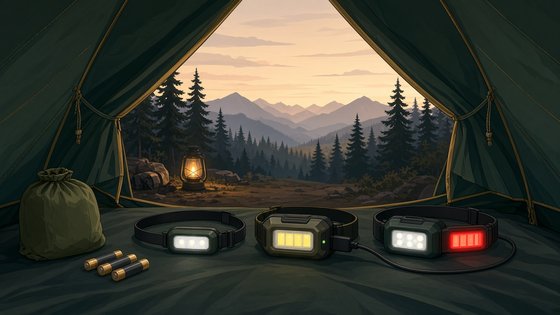
Three headlamps worth a look
Models get refreshed often, so treat these as types to search for. Check weight, battery type and IP rating on the current listing.
An everyday lamp in the Petzl Tikka style
This is the light that lives in the tent pocket. Light, a sensible flood beam, red mode, and a simple button you can find in the dark. Many Tikka versions take AAAs or an optional rechargeable pack. It is not built for throwing light far down a trail, and it does not pretend to be.
Best for: car campers whose headlamp mostly meets a stove, a tent zip and a toothbrush. Skip if you plan dawn starts on rough ground. Browse current versions: Petzl Tikka headlamps on Amazon.
A Black Diamond Spot-style all-rounder
Step up here when the lamp does trail duty as well as camp duty. The Spot family is the classic: a real spot beam alongside flood, red mode, a lock mode, and a sturdier water rating than most budget lamps. The button logic takes ten minutes with the leaflet. After that it is second nature, mostly.
Opinion: if you own one headlamp and you hike at all, this is the shape I would choose. A dying lamp on a late descent is a bad moment to learn your beam stops at your boots.

Search the current range: Black Diamond Spot headlamps on Amazon. Both AAA and rechargeable versions exist.
A budget rechargeable multipack
Not glamorous. Very useful. A two-pack or four-pack means every kid, every tent and the car glovebox get a lamp, and nobody nicks yours. Expect lighter build quality and vaguer runtime claims, so look for a lock and USB-C charging. Have a look at rechargeable headlamp multipacks on Amazon.
Headlamp habits that make camp nicer
A headlamp lights where you are looking. A lantern lights where everyone is sitting. Use the lantern for the table and the headlamp for cooking, pegs and loo trips. Our best camp lanterns guide covers the table side.
- Keep spare batteries warm. Cold saps cells fast. On frosty nights, keep the lamp and spares in an inside pocket or the foot of your sleeping bag.
- Angle the beam down at camp. Light your hands, not faces, so people can see you when you talk.
- Use red around others. Switch to red when you pass other pitches. Nobody loves the late arrival pitching on full white.
Pitching in the dark is easier if you have put the tent up once at home, and our best camping tents roundup has more habits for arriving late. Our car camping checklist puts a headlamp on every person for good reason. A spare in the glovebox rescues whoever forgets theirs.
Headlamp questions
How many lumens do I need for camping?
For tent and camp jobs, about 100 to 200 on flood is plenty. Night walking is easier with 300 or more and a decent spot beam.
Are rechargeable headlamps fine in winter?
Yes, with care. Lithium-ion packs lose capacity in the cold, so keep the lamp warm when not in use. For long cold trips, a lamp that also takes lithium AAAs is the safer bet.
The light you can find in the dark
Pick the lamp for the trips you actually take. Camp chores want a soft flood and red mode. Trail hours want a spot beam and a lock. Then charge it before you leave and keep it where you can reach it with your eyes shut.
Next time the tent zip sticks at midnight, your phone can stay in your pocket where it belongs.





Leave a Reply