Disclosure: Some links on this page are affiliate links. If you buy through them, we may earn a small commission at no extra cost to you. See our affiliate disclosure for details.
We arrived at the pitch after dark. The kids were already asking where the snacks lived. I had the tent poles in one hand, a headtorch in my teeth, wondering if this would be a five-minute dome or a half-hour argument with colour-coded poles. Car camping is supposed to be the easy mode of outdoor life. The tent still decides whether Friday night feels like a holiday or a DIY project.
If you want a straight answer on the best camping tents for car camping and weekend trips, buy by real capacity (not the number on the box), insist on a full-coverage rainfly if wet weather is likely, and treat vestibules, standing height, and pole quality as the features that separate a calm pitch from a soggy one. Ultralight backpacking shelters are a different sport.
Quick version: pick a forgiving dome like a Coleman Skydome for easy first-timer setup and fair-weather weekends; spend up on an REI Base Camp class shelter when wind and rain are common; choose a Marmot Tungsten style crossover when one tent must also join short trail overnights. Plan on roughly half the labelled capacity for adults who like to move.
| Product | Best for | Key spec band | Skip if |
|---|---|---|---|
| Coleman Skydome | First-timer car camping, fair-weather weekends | Nearly vertical walls; pre-attached poles on many sizes | You need serious storm bunker poles |
| REI Co-op Base Camp 6 | Wet and windy family pitches | Mid-80s sq ft floor; peak ~6’2″ / 188 cm | Budget is the main constraint |
| Marmot Tungsten 4 | Couples who also do short trail nights | Packable crossover; dual vestibules | Standing height is the whole point |
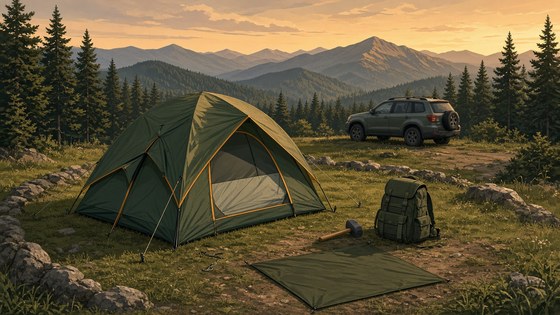
For the kit that shares the same pitch, see our guides to the best coolers for camping and the best camp chairs for car camping. A pad with a sensible R-value matters inside the fly too: browse the best sleeping pads for camping.
Table of contents
How to choose the best camping tents for car camping
Backpacking tents win on packed weight. Car-camping tents win on floor space, headroom, and how quickly you can get dinner started while someone else finds the cooler. Once the shelter lives in a boot rather than a rucksack, a 15 to 20 pound tent is not a failure.
I still flinch when a label says “6-person” and the floor barely fits four pads. Manufacturers count sleeping bags shoulder to shoulder with almost no gear inside. Treat labelled capacity as marketing optimism.
- Fly coverage: a fly that reaches near the ground beats a partial canopy when sideways rain arrives at 3 a.m.
- Doors and vestibules: two doors cut the crawl-over-your-partner tax. Vestibules keep muddy boots off the pad.
- Peak height: check it against your tallest camper if standing to change socks matters.
- Poles: aluminium usually flexes and recovers better than cheap fibreglass after rough seasons.
Opinion: I would rather own one honest car-camping tent I trust in surprise rain than three bargain domes that turn into sails. Practise the pitch once in the garden.
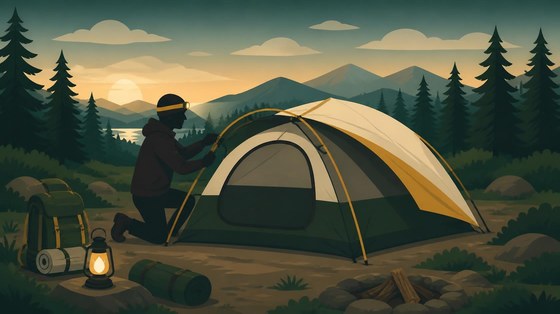
Three tent archetypes worth browsing
These named models keep showing up in serious car-camping roundups. Specs shift by year and region, so check current floor size, peak height, and fly coverage before you buy.
Budget and foolproof: Coleman Skydome
Coleman owns the “first family tent” shelf for a reason. Skydome models lean on nearly vertical walls for more headroom than old sloping domes, and many use pre-attached poles so first-timers are less likely to invent new swear words at dusk. The 4-person and 6-person sizes cover most casual weekend groups.
Trade-offs are honest: thinner materials than premium brands, limited pockets, and serious storms are not its favourite hobby. A friendly starter, not a decade-long storm bunker.
Browse current options: Coleman Skydome tents on Amazon.
Weather-first family base: REI Co-op Base Camp 6
When the site is exposed or the forecast is messy, the Base Camp 6 is the frequent “spend once” reference. Expect strong aluminium poles, two large doors, generous vestibules, and lots of interior pockets. Floor area sits in the mid-80s square feet with peak height around 6’2″ (about 188 cm), depending on the current cut.
Best for: rainy weekends, windy pitches, and families who want calm when weather turns. Skip if you need the lowest price or mainly camp in fair-weather parks. It is heavier and dearer than value domes, and airflow is more muted.
Search listings: REI Base Camp 6 tent on Amazon.
Crossover for couples: Marmot Tungsten 4
The Tungsten 4 sits between car camping and short backpacking. Lower peak height than cabin-style tents, but a more packable shape, aluminium poles, dual vestibules, and often a footprint in the box. Reviewers call it luxurious for two, comfortable for three, and tight for four once pads arrive.
Choose it when one tent must live in the car most weekends and still join a short trail overnight. Skip if standing height is the whole point; a roomy cabin-style tent suits kids better when the car is always three metres away.
Current listings: Marmot Tungsten 4 tents on Amazon.
Pitch habits that save the weekend
Avoid hollows where water pools. Point a low door away from the prevailing wind when you can. Stake corners before you tension every guyline. Keep a tiny repair kit: pole splint, tape, spare cord, heavier stakes for soft ground. Dry the tent before long storage. Mould does not care that you meant to air it on Monday.
Inside, a warm bag matters as much as the fly (see how to stay warm while camping), and a reliable headlamp keeps you from discovering the guyline with your shin. See the best sleeping bags for camping and the best headlamps for camping and hiking. Before you load the boot, run through our car camping checklist so the pegs, mallet, and airbed pump actually make it to the pitch.
Quick FAQ
Do I need a 6-person tent for a family of four?
Often yes if you want space for bags, a dog, or morning dressing without a queue. A roomy 4 can work for two adults and one small child who pack light.
Are instant tents worth it?
For casual car camping the speed is real. Check packed bulk and weather ratings. Instant frames are not automatically stronger.
Can I backpack with a car-camping tent?
You can haul almost anything for a mile. You will not enjoy it. If trail nights are common, pick a Tungsten-class crossover, or keep a separate backpacking shelter.





Leave a Reply