Disclosure: Some links on this page are affiliate links. If you buy through them, we may earn a small commission at no extra cost to you. See our affiliate disclosure for details.
The car doors are still open, somebody has already dumped the food bags on the cool box lid, and the stove is half out of its bag on the damp grass. Ten minutes later you are cooking with your back to the wind, chopping on a plate balanced on a seat, and hunting for the washing-up bowl that somehow ended up under a sleeping bag.
Knowing how to set up a camp kitchen starts before the rest of the kit leaves the boot. Pick one dedicated zone for cooking, washing and serving, put the table and cooler there first, then unpack into it. Everything else (tents, chairs, kids’ bikes) can wait five minutes. That short pause is what stops dinner turning into a scramble.
Table of contents
Pick the kitchen spot first
Walk the pitch once before you unload. You want flat ground within a few metres of the car if you are car camping, out of the main footpath through camp, and not under a branch that drips after rain. Keep the kitchen downwind of the tent door so cooking smells and smoke do not blow straight into sleeping space.
Leave a clear path between the cooler, the table and the wash area. At night that path is what your feet will find when you are tired and the torch is on the wrong setting. If the site has a fire ring, keep the kitchen to one side of it rather than wrapping the whole ring in kit.
In my opinion, the kitchen should be the first thing you set, not the last. A pitched tent with nowhere sensible to cook is still unfinished camp.
Table, stove and cooler layout
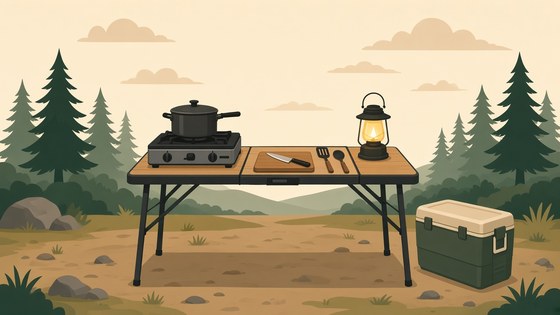
Think of three stations in a shallow U or a straight line: cook, prep, cold storage. A solid camping table is the spine. If you are still choosing one, our roundup of the best camping tables covers the fold-out and roll-top styles that actually hold a stove and a chopping board.
- Stove on one end of the table, legs locked, clear of overhanging fabric and well away from the tent wall. Pair it with whatever you already trust from our camping stoves guide.
- Prep space in the middle: board, knife, spoons, seasoning, a tea towel. Keep the kettle and pans within reach; see our camping cookware notes if your set is still a mix of mismatched pots.
- Cooler on the ground at the other end or just beside the table, lid hinged so it opens away from the stove. Never park the cool box under a dripping flysheet.
A short lantern on the table edge beats a headlamp in your eyes while you stir. Our camp lanterns picks include small ones that clip or sit flat without tipping into the sauce.
Washing and waste
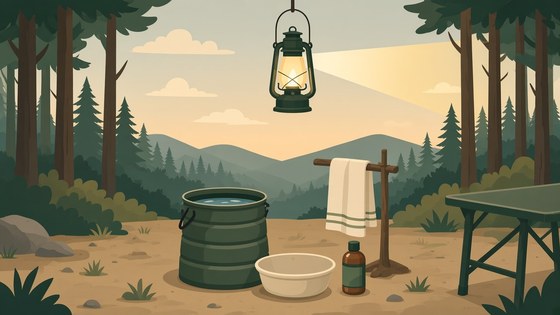
Washing is the bit people leave until plates are stacked in a wobbly pile. Set it up early. A collapsible camping sink (or a simple dish basin) on a second low table or a stump, a few metres from the cook zone, keeps grey water away from food.
Three bowls if you can manage it: wash, rinse, and a dry rack or tea towel. Use a small bottle of biodegradable camp soap, and strain food scraps into a bin bag before you tip the water. Scatter grey water well away from streams and the tent, following the site rules.
Keep a roll of bin bags and a small rubbish sack clipped to a table leg from the moment you arrive. Food waste left on the table overnight is an invitation for everything from ants to raccoons, depending where you camp.
Light and weather
Evenings arrive faster than the cook thinks. Put light on the kitchen before the first pan goes on. One lantern on the table, one at foot level near the cooler, and you can find the spatula without kicking the stove.
Wind is the other spoiler. Turn the table so the stove burner faces away from the prevailing breeze, or hang a simple wind screen if your stove came with one. A light tarp or awning over the kitchen helps in drizzle, but keep fabric well clear of open flame and hot pots.
If rain is coming in hard, shift washing under cover and leave only the stove under the tarp edge. Wet coolers still seal; wet chopping boards just get slippery.
Common camp kitchen mistakes
- Cooking on the cool box lid. It works once. Then the lid warps, the seal suffers, and dinner grease ends up on tomorrow’s milk.
- Stove too close to the tent. Sparks, heat and steam all belong outside the sleeping space.
- No dedicated wash spot. Plates migrate to the ground, then into the tent vestibule.
- Food left out “just for a minute.” That minute stretches. Bag it or box it.
- Unpacking everything before the kitchen exists. You end up moving the same bags twice.
Packing the cooler properly helps the whole zone stay usable. Our tip on how to pack a cooler for camping is worth a skim before the next trip, and a solid box from the coolers roundup earns its keep when the kitchen is busy.
A simple kit list that actually fits
You do not need a trailer kitchen. For most car-camping weekends this is enough:
- One sturdy table (or a table plus a small side surface for washing)
- Stove, fuel, lighter, kettle
- Cookware and a compact camping utensil set that lives in one roll or organiser
- Cooler packed before you leave home
- Collapsible sink or basin, biodegradable soap, sponge, tea towel
- Lantern plus a spare headlamp
- Bin bags, washing-up cloth, small cutting board and one sharp knife in a sheath
Check the kitchen gear against your car camping checklist the night before so you are not improvising a spatula out of a stick at half seven. A kettle that sits stably on your stove (see our camping kettles guide) is a small luxury that makes mornings calmer.
Once the zone is up, the rest of camp feels settled. Food has a home, washing has a home, and you are not balancing a hot pan on a chair again. Set the kitchen first, keep it simple, and dinner stops being the stressful part of the day.