Disclosure: Some links on this page are affiliate links. If you buy through them, we may earn a small commission at no extra cost to you. See our affiliate disclosure for details.
You know the moment. You unzip the bag on night two of a trip, get a faint whiff of last summer, and notice it has gone a bit flat around the footbox. It is not broken. It is just dirty, and dirt is quietly stealing your warmth.
Here is the short answer on how to wash a sleeping bag: do it rarely, by hand in a bath or in a big front-loading machine with no agitator, using a cleaner made for down or synthetic fill. Rinse it more than you think you need to, then dry it slowly and completely before it goes anywhere near a stuff sack. The drying is the part people rush, and it is the part that matters most.
Table of contents
Do you actually need to wash it?
Probably less often than you think. Every wash wears the shell fabric and the insulation a little, so most bags only need a proper clean once every season or two of regular use. Body oil, sweat and sunscreen are the real problem. They clump the fill, and clumped fill traps less warm air.
Signs it is time:
- The bag smells stale even after a long airing
- The fill looks flat or lumpy and does not spring back when you shake it
- You feel colder than you used to at the same temperatures
- The hood and collar look shiny or grimy
If it is just a bit musty, try a day hanging outside in dry shade first. If you keep waking up chilly, check the basics in our guide on how to stay warm camping too, because a cold night is not always the bag’s fault.
Before you start
Read the care label. It sounds obvious, but the label tells you whether the fill is down or synthetic, and whether the maker wants a hand wash only. Then:
- Pick the right soap. Normal detergent strips the natural oils from down and can leave residue in synthetic fill. Use a cleaner made for the job, such as a technical down wash on Amazon, or a synthetic-specific wash for synthetic bags.
- Zip it up fully and fasten any Velcro tabs so nothing snags.
- Turn it inside out if the label allows. It helps the soap reach the dirtiest side.
- Never use fabric softener or bleach. Ever.
One honest opinion: skip the launderette top-loader with the central paddle. That paddle can tear the internal baffles, and once those go, the fill wanders and you get permanent cold spots. A bath is slower but much kinder.
How to wash a sleeping bag by hand or by machine
In the bath
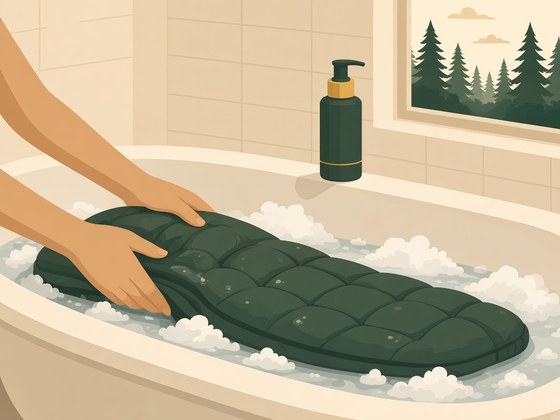
Fill the bath with lukewarm water, enough to cover the bag, and stir in the cleaner as the bottle directs. Push the bag under and gently press the air out. Then knead it slowly with flat hands for a few minutes, paying a bit more attention to the hood and footbox.
Leave it to soak for about an hour. Drain the bath, press out the soapy water, refill with clean water and press again. Keep going until the water stays clear and stops foaming. Three or four rinses is normal. Leftover soap makes fill sticky, so this is where patience pays off.
Now the awkward bit. A wet down bag is heavy and fragile. Do not pick it up by one end, because the weight of the soaked fill can rip the baffles. Press out as much water as you can, then roll it gently and scoop it up from underneath in both arms like a sleeping dog.
In a machine
A large front-loading machine without an agitator works well and saves your back. Use a gentle or wool cycle, cold or cool water, and the right cleaner. Add an extra rinse cycle, then a slow spin to get rid of more water before drying. If the bag barely fits in the drum, it is too big for that machine. Go to a bigger one.
Drying it properly (the bit that really matters)
A sleeping bag that goes away damp will smell worse than when you started, and wet down can go mouldy inside the baffles where you cannot see it. So dry it all the way, even if that takes most of a day.
The tumble dryer is your friend here, on low heat only. Add two or three clean tennis balls or wool dryer balls on Amazon to break up clumps of fill as it tumbles. Stop every 30 minutes or so, pull the bag out, and tease apart any lumps with your fingers. A down bag can take two to four hours. Synthetic bags dry faster.
Mistake to avoid: high heat. It can melt thin shell fabric and damage synthetic fill. Low and slow, always.
No dryer? Lay the bag flat on a drying rack in a warm, airy room or outside in dry shade, flipping and shaking it every few hours. It will take a couple of days. The same rules we use for drying a tent after camping apply: airflow beats sunlight, and fully dry beats nearly dry.
You will know it is done when the fill feels light, even and springy all over, with no damp clumps hiding in the corners.
Storing it so it stays lofty
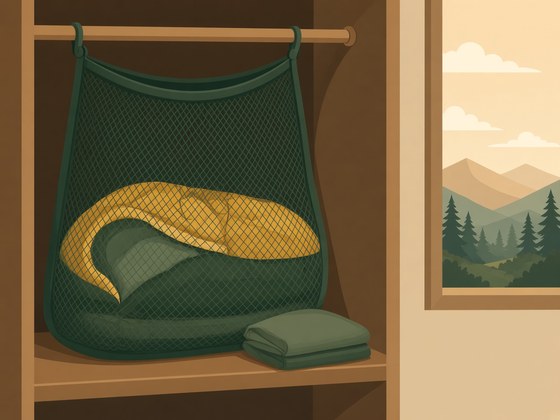
This is the habit that makes washes rarer. At home, never keep the bag squashed in its stuff sack. Long compression wears out the loft. Keep it loose in a big breathable sleeping bag storage sack on Amazon, or hang it in a wardrobe, somewhere cool and dry.
On the trail, the stuff sack is fine for a few days. Keep it inside one of the best dry bags you own so a river crossing or a soggy pack does not undo all your work. A liner helps too. It takes the brunt of sweat and is far easier to throw in the wash than the whole bag.
Damp inside the tent is the other quiet enemy. If you wake to a wet footbox, our tips on how to stop tent condensation will save the bag a lot of grief.
When cleaning is not enough
Sometimes a bag is simply worn out. If the fill stays flat after a careful wash and a slow dry, or a synthetic bag has gone thin and stiff, it may be time to look at replacing it. Our roundup of the best sleeping bags for camping is a good place to start.
But give it a proper wash first. Plenty of bags that feel finished just need the grime out and an afternoon in the dryer with a couple of tennis balls bouncing around. It is a dull job. It is also the cheapest warmth you will ever buy.