Disclosure: Some links on this page are affiliate links. If you buy through them, we may earn a small commission at no extra cost to you. See our affiliate disclosure for details.
The climb was fine. It was the way down that hurt. Loose stones, a steep scree path, a full pack pushing you forward, and by the car park your knees feel about twenty years older than the rest of you.
That is the moment most people start looking at the best trekking poles. Two light sticks will not make a hill flatter, but they spread the load into your arms, add two points of contact on wet rock, and take strain off your knees on long descents.
Quick version: for most hikers, an adjustable aluminium pair with cork grips and lever locks is the sensible buy, and the Cascade Mountain Tech poles are an easy starting point. If you want a more refined adjuster and an angled grip, look at the Black Diamond Trail Ergo Cork. If you pack light or travel a lot, a folding carbon pole like the Black Diamond Distance Carbon Z packs down small enough to hide inside a rucksack.
Table of contents
What to look for in trekking poles
Four things matter, and none of them are glamorous.
- Locks: external lever locks (the flip clamps) are easier to adjust with cold hands than old twist locks, and you can see at a glance whether they are closed.
- Aluminium or carbon: aluminium bends before it breaks, which matters when you wedge a pole between rocks. Carbon is lighter and stiffer, but it can snap rather than flex.
- Grips: cork moulds to your hand and handles sweat well on warm days. Foam is softer and cheaper. Rubber is grim in summer.
- Folding or telescoping: telescoping poles adjust to any height. Folding poles pack shorter but usually have a narrow adjustment range, or none at all.
The best trekking poles for most hikers
Three picks, chosen to cover the usual buyer: the first pair, the upgrade, and the pack-light option. Details below come from the makers, not from our own trail time.
| Pole | Build | Adjust or pack | Best for |
|---|---|---|---|
| Cascade Mountain Tech Aluminium Cork | Aluminium, cork grips | Telescoping, lever locks | First pair, day hikes |
| Black Diamond Trail Ergo Cork | Aluminium, angled cork grips | Telescoping, FlickLock | Regular hikers wanting an upgrade |
| Black Diamond Distance Carbon Z | Carbon, foam grips | Folds into three, mostly fixed length | Light packers and travel |
Cascade Mountain Tech Aluminium Cork Poles
These are the poles you see on half the trailheads in summer, and there is a reason. Adjustable aluminium, cork grips, quick lever locks, sold as a pair with spare tips and baskets.
They are not the lightest, and the finish is plain. For day walks, that hardly matters. Best for: anyone trying poles for the first time who does not want to spend much to find out.
Worth a look: Cascade Mountain Tech trekking poles on Amazon.
Black Diamond Trail Ergo Cork
This is the step up. The Trail Ergo Cork uses Black Diamond’s FlickLock adjusters, which have a good name for staying put once set, and the cork grip is angled slightly forward so your wrist sits more naturally when the pole is planted ahead of you.
My opinion: the adjuster matters more than the weight. A pole that slips shorter every time you lean on it on a descent is worse than no pole, and this is where paying more tends to pay off.
Have a look at the Black Diamond Trail Ergo Cork on Amazon.
Black Diamond Distance Carbon Z
A different animal. The Distance Carbon Z folds into three short sections like a tent pole and snaps together with one pull. It is light, and short enough to fit in a duffel or a carry-on.
The trade-off is size. Most versions are fixed length, so you buy the size that matches your height and live with it. Carbon also dislikes being levered sideways between rocks. Skip if: you want one pair to share around the family, or you are hard on kit.
Check sizes for the Black Diamond Distance Carbon Z on Amazon.
How to size and use trekking poles
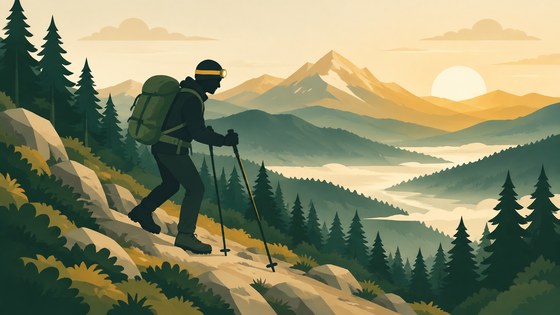
Start on flat ground. Hold the pole with the tip on the floor beside your foot and adjust until your elbow sits at roughly 90 degrees. That is your everyday length.
Then change it as the ground changes. Shorten the poles a few centimetres for long climbs so you are not pushing your hands up past your shoulders. Lengthen them for descents, so the tips reach the ground ahead of you before your feet do.
The wrist straps are not decoration. Bring your hand up through the loop from underneath, then grip the pole over the strap. Now your weight goes through the strap rather than your clenched fingers. One exception: take your hands out of the straps on river crossings and sketchy scrambles, where you want to let go fast if you slip.
With a heavy multi-day load, poles help most when the pack itself is sorted. Our guide on how to pack a hiking backpack covers keeping the weight close to your back.
Poles do more than help you walk
Many lightweight shelters use trekking poles instead of tent poles, so if you camp in one, adjustable length is close to essential. The tips in our piece on pitching a tent in the rain apply here too, because getting the poles set at the right height is half the job.
They also test bog depth, push back brambles, and steady you while you crouch at a stream to refill. If you filter on the trail, see our roundup of the best water filters for hiking pairs well with this one.
Care, and the mistakes everyone makes once
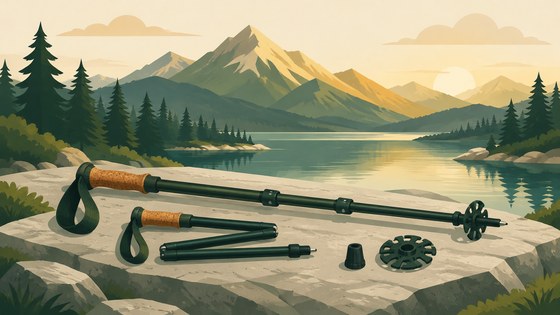
- Packing them away wet. Water sits inside telescoping sections and can corrode the joints. Pull them apart and let them dry at home.
- Over-tightening the locks. If a lever needs real force to close, ease the small adjustment screw instead.
- Leaving the metal tips bare on rock. Rubber tip covers are quieter and grip better on hard surfaces and pavement.
If you finish late, a decent head torch makes the last downhill much less of a guessing game; we have a list of the best headlamps for camping and hiking for that.
Two poles, set at the right height, will not make you faster. They will make the last hour of the day feel like the first, and your knees will notice before you do.