Disclosure: Some links on this page are affiliate links. If you buy through them, we may earn a small commission at no extra cost to you. See our affiliate disclosure for details.
The first fish that shook the tip was a perch the size of my palm. I had spent twenty minutes untangling a wind knot on the pier, fingers cold, line draped around my boots like spaghetti. Then the tip nodded twice, the drag chirped, and suddenly the whole morning made sense. Messy casts, patience, then a small pull that feels enormous.
If you want the short answer on the best spinning rods for beginners, start with a medium or medium-light spinning rod around 6’6″ to 7′ (about 2 to 2.1 metres), pair it with a 2500 to 3000-size spinning reel, and favour a blank that forgives tip bumps and car-boot accidents. Pure graphite feels sharper. Composite blends survive the learning curve. This guide sticks to freshwater lakes and rivers.
Quick version: an Ugly Stik GX2 is the forgiving first rod that survives almost anything. A Berkley Lightning Rod gives a lighter, livelier feel on a budget. A Fenwick Eagle is the first nice step-up once you know fishing will stick.
| Product | Best for | Key spec band | Skip if |
|---|---|---|---|
| Ugly Stik GX2 | Forgiving first blank that survives boot abuse | Graphite-fibreglass blend; 6’6″ to 7′ medium | You want surgical tip feel above all else |
| Berkley Lightning Rod | Lighter feel on a budget | Multi-modulus composite; livelier tip | Maximum abuse resistance is the priority |
| Fenwick Eagle | First nice technique step-up | 24/30-ton graphite blend; clearer bites | This is truly rod number one and you are rough on gear |
Browse more kit in our fishing guides as the section grows. For overnight lake camps after a dawn session, see the best camping tents for car camping and the best sleeping bags for camping.
Table of contents
What the best spinning rods for beginners have in common
“Best” here is not a trophy shelf. It is the rod that lets you practise casting without snapping the tip the first time you close a car door on it. Spinning gear sits the reel under the rod and casts with an open bail. That layout is kinder than baitcasters when your thumb has never feathered a spool.
A ready-made spinning combo (rod and reel sold together) is a sensible first buy if you do not want to match drag specs by hand. A rod-only purchase works if you already like a certain reel. Matching line weight and lure weight to the blank matters more than the logo colour.
Power, action, and length
Power is how hard the blank resists a bend. Ultralight and light rods shine for trout, perch, and tiny jigs. Medium-light and medium cover the broadest beginner water: panfish, trout, average bass, and light river work. Medium-heavy belongs later, when you throw heavier baits near cover.
Action describes where the rod flexes. Fast tips bend near the tip and feel bites sooner. Moderate actions bend deeper, load more easily on a cast, and forgive timing mistakes on the hookset.
Length trades control for reach. Around 6′ to 6’6″ is tidy on brushy banks and small boats. Around 7′ helps with distance on open lakes and piers. Two-piece rods travel better in a car.
Sensitivity versus forgiveness
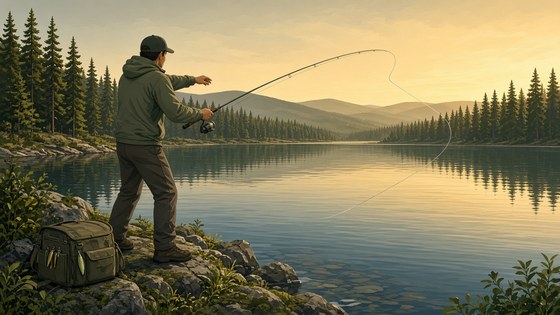
Sensitivity is the tip telling you a soft mouth took the lure. Forgiveness is the blank surviving a smash into a pier rail or a snagged cast yanked too hard. Graphite often wins on feel. Fibreglass and graphite-fibreglass composites often win on toughness.
Opinion: beginners usually need more forgiveness than they think. You will still feel bites on a tough composite rod; the signal is just a little duller. When you know you will fish often and handle gear carefully, a lighter graphite step-up starts to make sense.
Three beginner spinning rods worth browsing
These models keep showing up in beginner roundups. Exact lure ratings shift by year, so check current listings.
Forgiving classic: Ugly Stik GX2
Ugly Stik built its reputation on blanks that refuse to die. The GX2 continues that idea with a graphite and fibreglass blend, a clear tip, and one-piece stainless guides that skip fragile ceramic inserts. A 6’6″ or 7′ medium is the usual all-rounder for lakes and rivers.
Skip if: you baby your gear and chase feel above all else. It is heavier and less crisp than pure graphite at the same price. Browse current options: Ugly Stik GX2 spinning rods on Amazon.
Lighter feel on a budget: Berkley Lightning Rod
The Lightning Rod is the long-running “lighter than Ugly Stik, still approachable” pick. Recent versions use multi-modulus composite blanks and stainless guides with inserts. Medium-light and medium models around 6’6″ to 7′ suit soft plastics, spinners, and light crankbaits.
It will not match the GX2 for abuse resistance, and guide inserts can chip if knocked hard. In exchange you get a livelier tip and less arm fatigue on long bank walks. Search listings: Berkley Lightning Rod spinning rods on Amazon.
Crisp step-up: Fenwick Eagle
Fenwick’s Eagle has long been the classic “first nice rod”. Current blanks use a graphite blend aimed at crisp actions and clearer bite detection, with soft-touch reel seats and tapered grips.
Best for: anglers who already know fishing will stick and want sharper hooksets. Less forgiving than a composite Ugly Stik, so it is a poor choice for the car-door years. Browse: Fenwick Eagle spinning rods on Amazon.
First-trip tips (and a short safety note)
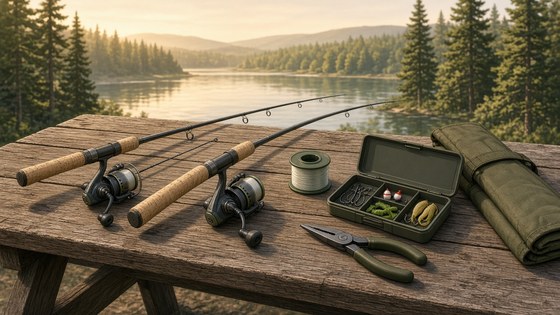
Spool the reel carefully. Overfilled spools throw loops; underfilled spools kill distance. Start with a simple spinner or soft plastic on a light jig head within the lure weight printed on the blank. Practise on grass first. Close the bail by hand after the cast; it lays line more neatly.
Hooks are sharp. Keep them capped in transit, watch your backcast around people and dogs, and never cast over a crowded pier walkway. Early starts mean poor light, and a small headlamp keeps you from stepping on the tip: see our guide to the best headlamps for camping and hiking.
Quick FAQ
Is braid better than mono for beginners?
Mono stretches and forgives abrupt hooksets. Light braid casts well but usually needs a leader, and wind knots punish messy spooling.
Can one rod do lakes and rivers?
Yes, within reason. A medium or medium-light rod around 6’6″ to 7′ covers most bank and small-boat freshwater. Specialise later.
Then get a line on the water before you upgrade anything. The best spinning rod for beginners is the one still in your hands when the tip finally shakes.





Leave a Reply