Disclosure: Some links on this page are affiliate links. If you buy through them, we may earn a small commission at no extra cost to you. See our affiliate disclosure for details.
Wind found the picnic table before the water did. The kettle sat there looking optimistic while the flame danced sideways, and breakfast turned into a long conversation about whether we should have brought the bigger stove from the boot. Camp cooking is rarely about fancy recipes. It is about heat you can trust when the weather has opinions.
If you want the short answer on the best camping stoves for backpacking and car camping, match the stove to how you travel. Screw-on canister burners and integrated systems win when weight matters. Two-burner propane stoves win when the car is three metres away and you want eggs and coffee together. Fuel type, wind, simmer control, and honest boil times beat a glossy hangtag.
Quick version: a Soto WindMaster is the all-round canister pick for trail cooks. A Jetboil Flash suits boil-and-go freeze-dried menus. A Coleman Cascade Classic covers budget car-camping breakfasts for a small group.
| Product | Best for | Key spec band | Skip if |
|---|---|---|---|
| Soto WindMaster | All-round canister trail cooking | ~2.5 to 3 oz burner; regulated; recessed head | You only ever boil water in an integrated pot |
| Jetboil Flash | Fast boil-and-go freeze-dried menus | ~13 oz system with heat-exchanger pot | You want long simmer and frying pans |
| Coleman Cascade Classic | Budget car-camping two-burner breakfasts | ~20,000 BTU total; suitcase propane | You need Camp Chef-class searing heat for four |
For the kit that shares the same pitch, see our guides to the best camping tents, the best sleeping bags for camping, and the best headlamps for camping and hiking.
Table of contents
How to choose the best camping stoves for your trips
Backpacking stoves win on packed weight and nested cook kits. Car-camping stoves win on cook space, dual burners, and the ability to simmer bacon while the kettle finishes. Once the stove lives in a boot rather than a rucksack, a 10 to 15 pound two-burner is not a failure. It is often the calm choice.
A Jetboil-class system that boils fast and packs into itself is brilliant for freeze-dried meals. It is a poor tool if you want to fry flatbread every morning. A Coleman-class two-burner is the opposite trade.
Fuel types in plain English
Isobutane-propane canisters (the screw-thread “camping gas” cans) power most modern backpacking stoves. They are clean, simple, and widely stocked. Performance drops in deep cold as the canister chills. Regulated burners hold output better as the can empties or cools.
Propane cylinders (the familiar green 16 oz bottles, or larger tanks with an adapter) power most tabletop two-burners. They are cheap per burn-hour for car camping and too bulky for trail miles. Liquid fuel stoves still matter for remote winter travel, but they need priming and more maintenance.
Empty canisters need proper disposal or recycling where your region allows it. Never toss pressurised containers into a fire pit.
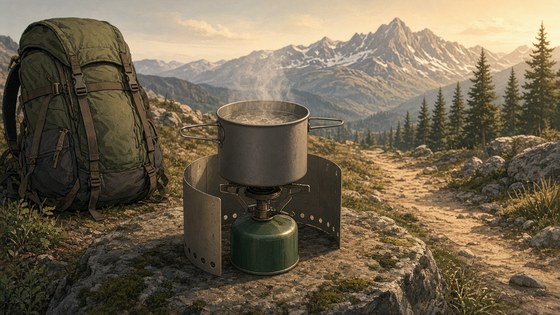
Wind, simmer, and boil-speed honesty
Printed boil times are usually calm air and ideal pots. Real campsites add wind, cold stream water, and a lid you forgot. Treat them as a relative ranking, not a stopwatch promise.
Wind steals heat fast. Recessed burners, heat exchangers, and proper windscreens (used as the maker intends) matter more than another 1,000 BTU on the box. Never wrap foil so it overheats a fuel canister.
Simmer control separates coffee and sauce from scorched porridge. Many integrated systems are built to scream hot, not to hover at low flame. If you cook rather than just boil, read reviews for simmer notes, not only boil bragging.
Safety: ventilation, fuel handling, and common sense
Camp stoves produce carbon monoxide. Use them outdoors in open air. Tents, vestibules, and closed vehicle cabins are the wrong place for a running stove, even in miserable weather.
Change canisters away from flames and hot burners, and check O-rings and threads. Keep stoves on a stable, level surface so pots cannot tip onto dry grass, keep kids and dogs clear of the cook zone, and let the stove cool before you pack it.
Three camping stoves worth browsing
These models keep showing up in backpacking and car-camping roundups. Specs and weights shift by year, so check current listings.
All-round canister: Soto WindMaster
The WindMaster is the frequent “buy this canister stove” pick for three-season backpacking: a regulated burner, a recessed head that shrugs off breeze better than many open designs, and pot supports that handle both solo cups and wider group pots. The burner alone weighs roughly 2.5 to 3 oz.
Trade-offs: it still needs a separate pot, and piezo igniters can fail after hard seasons, so carry a lighter. Browse current options: Soto WindMaster stoves on Amazon.
Boil-and-go integrated: Jetboil Flash
If your trail menu is mostly hot drinks and freeze-dried pouches, an integrated system earns its keep. The Flash pairs a burner with a heat-exchanger pot and an insulating cozy, and the whole kit packs around a fuel can. It is heavier than a bare burner, often around 13 oz with the pot, but fast and frugal for boil-only routines.
Skip if: you want to fry or simmer. Pot diameter is locked to the system. Search listings: Jetboil Flash stoves on Amazon.
Budget car-camping two-burner: Coleman Cascade Classic
For boot-based weekends, the Cascade Classic is the value two-burner many roundups still point to. Twin burners (about 20,000 BTU total on current Coleman specs), piezo ignition, adjustable wind guards, and a suitcase shape make Friday-night pasta realistic. Fuel economy is a frequent compliment.
Best for: family pitches and simple group breakfasts. Boils are slower than high-output rivals, and build quality is weekend solid rather than indestructible. Current listings: Coleman Cascade Classic stoves on Amazon.
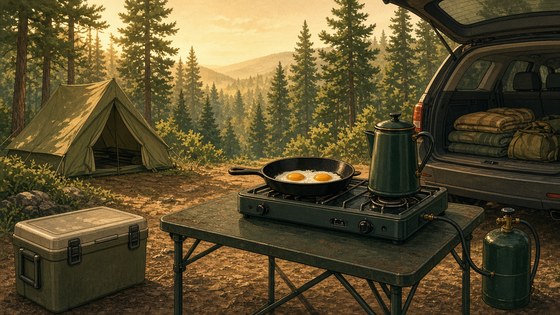
Camp-kitchen tips
Boil with a lid. Shelter the stove without trapping heat against a canister. Keep a mug of water nearby for greasy flare-ups. In bear country, follow local food-storage rules; a stove is not a food locker. Cold drinks are the other half of camp cooking, so browse our best coolers for camping guide too.
Opinion: practise once in the garden with a full kettle. The winner is simply the stove that makes breakfast boringly reliable before the day hike starts.
Quick FAQ
Can I use a backpacking canister stove for car camping?
Yes, for simple meals. You will miss a second burner the first time someone wants coffee and eggs together.
Do I need a windscreen?
Often yes for open canister burners, used as the manufacturer allows. Never create a heat trap around the fuel can.





Leave a Reply